01
Exposed movement
Open gearing, jeweled pivots and a visible escapement make the mechanism part of the experience.
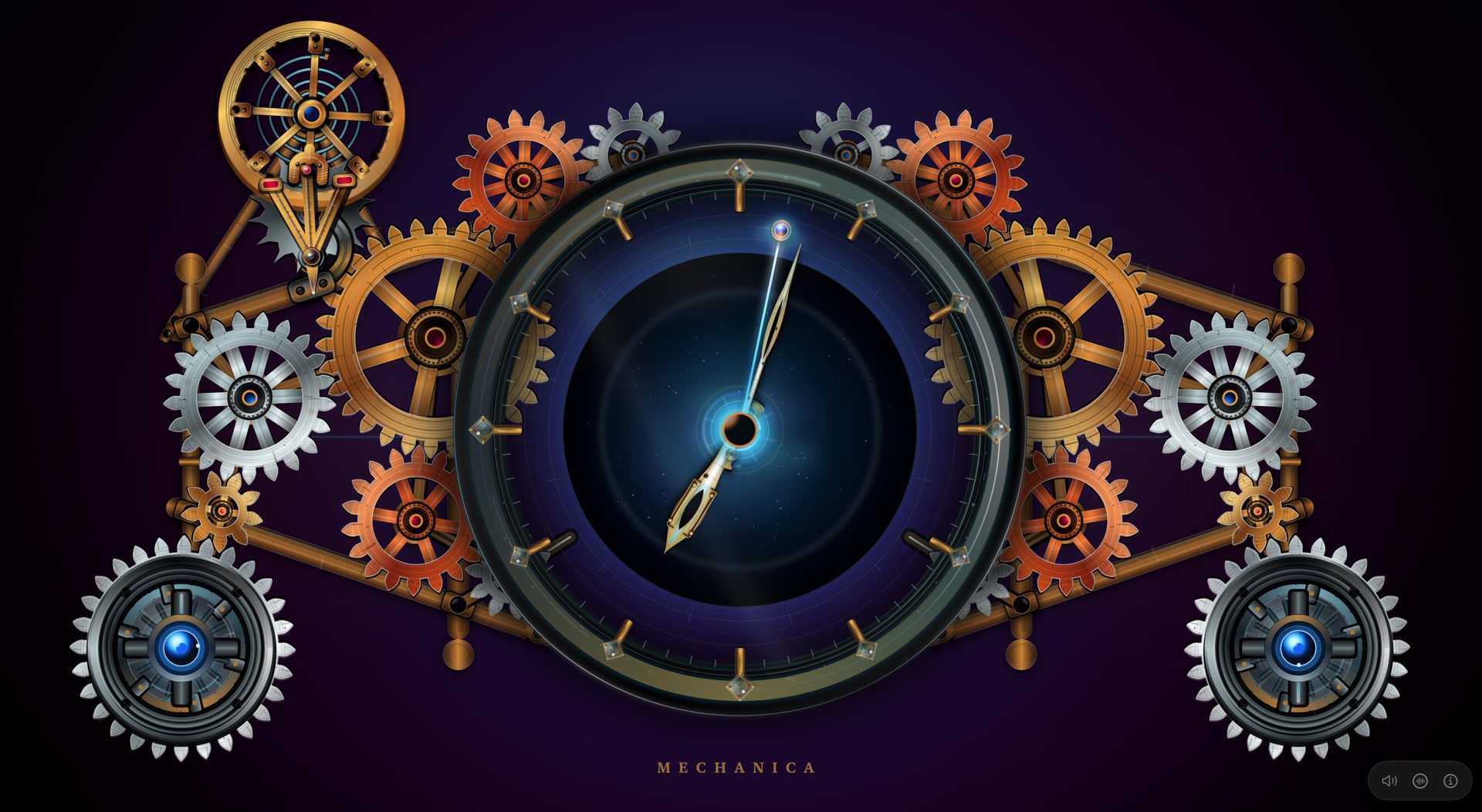
A mechanical instrument for experiencing time.
The blueprint
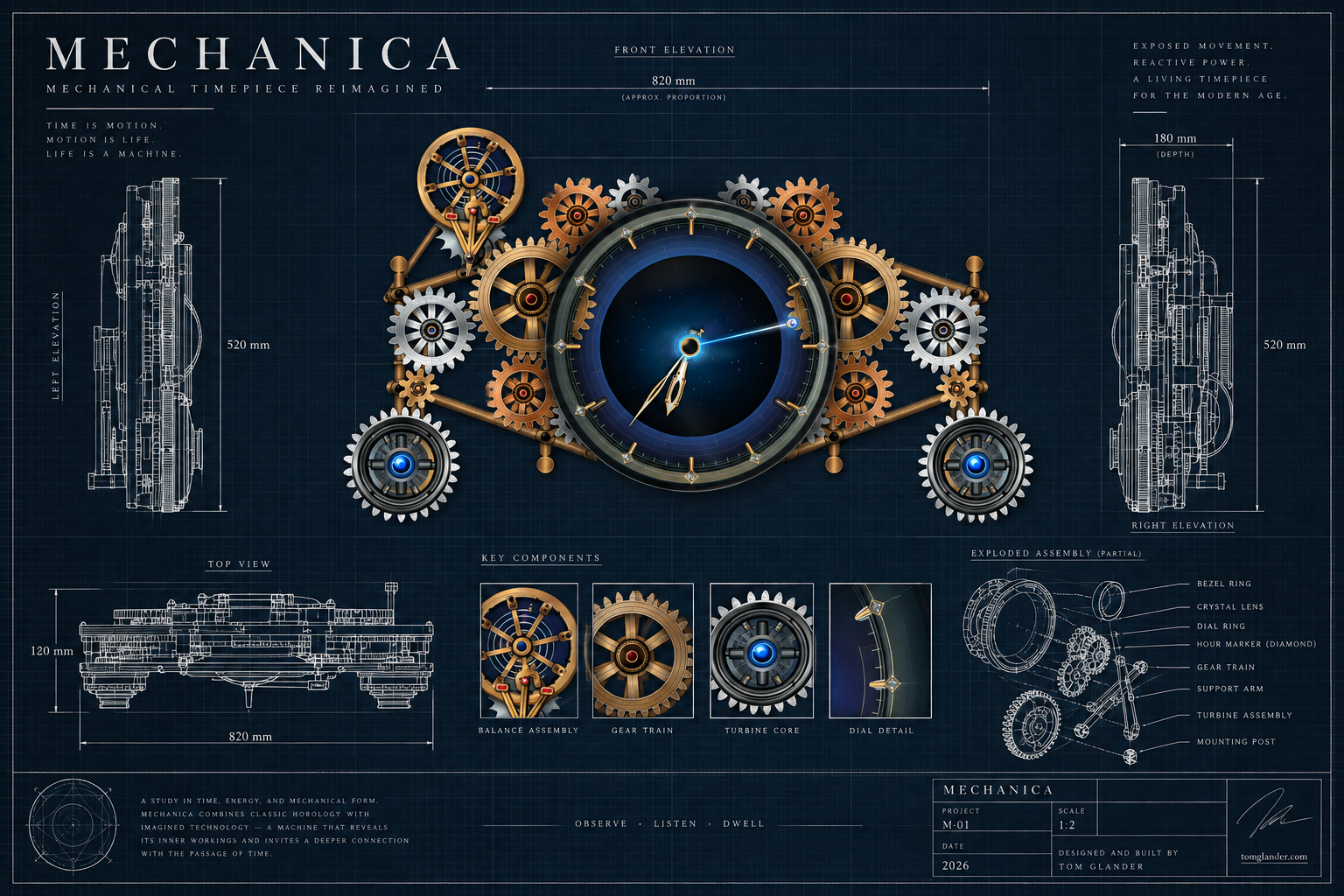
Mechanica began as a study in exposed movement, visible power and invented horology. Gears, turbine cores, the escapement, jeweled markers, hands and sound were designed to behave as parts of one machine — not as decoration around a clock.
The machine
The movement remains exposed. Power appears to move through it. The balance wheel releases the escapement, turbine cores radiate energy, the chronometer gathers charge around the minute, and the hands carry that energy across the face.
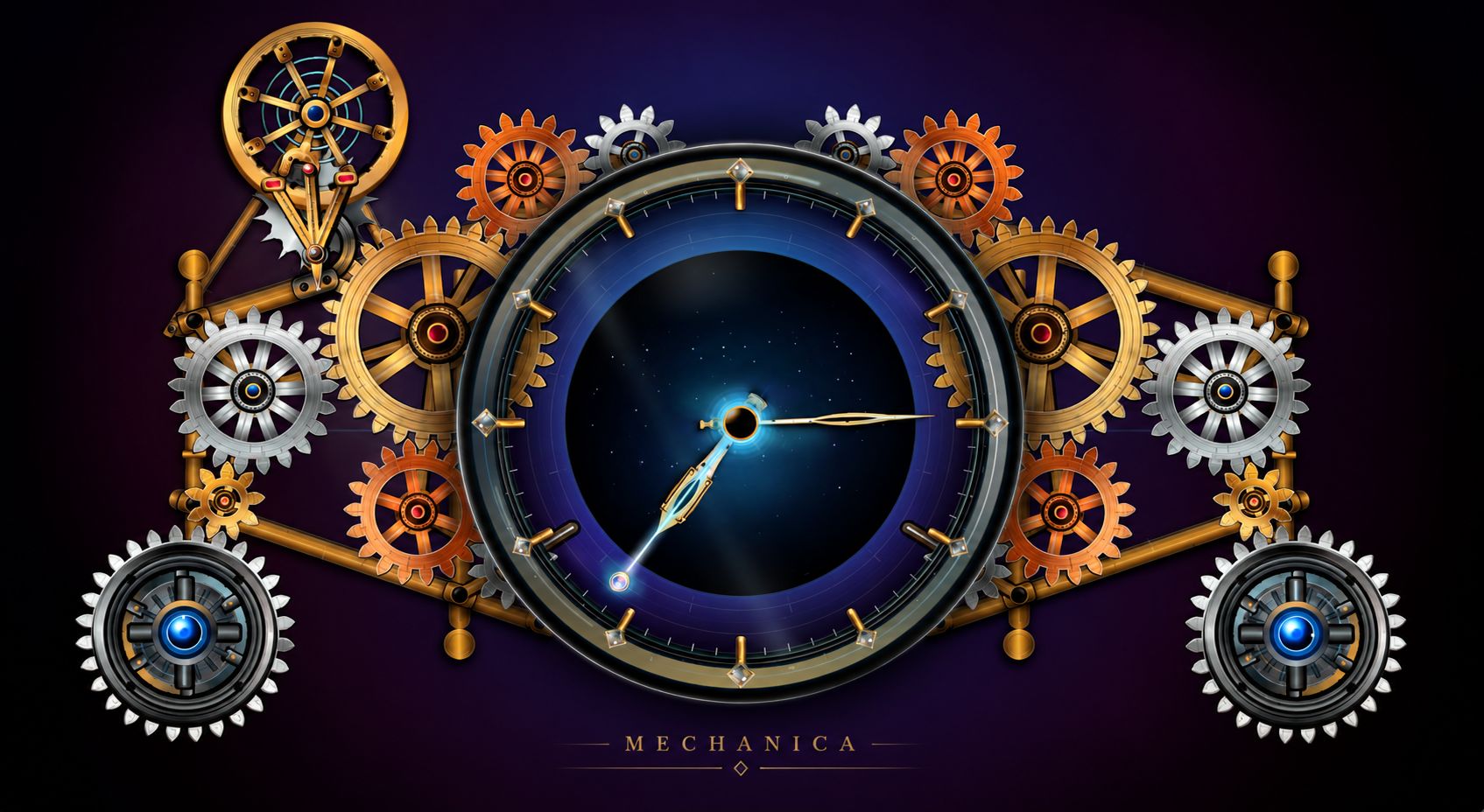
Open gearing, jeweled pivots and a visible escapement make the mechanism part of the experience.
Twin lower turbines act as the machine’s contained power source, driving light and motion.
The central chronometer gathers energy before the minute and releases it through the transition.
Diamond markers, machined hands and reflected light give the face the presence of a physical instrument.
Machine Voice
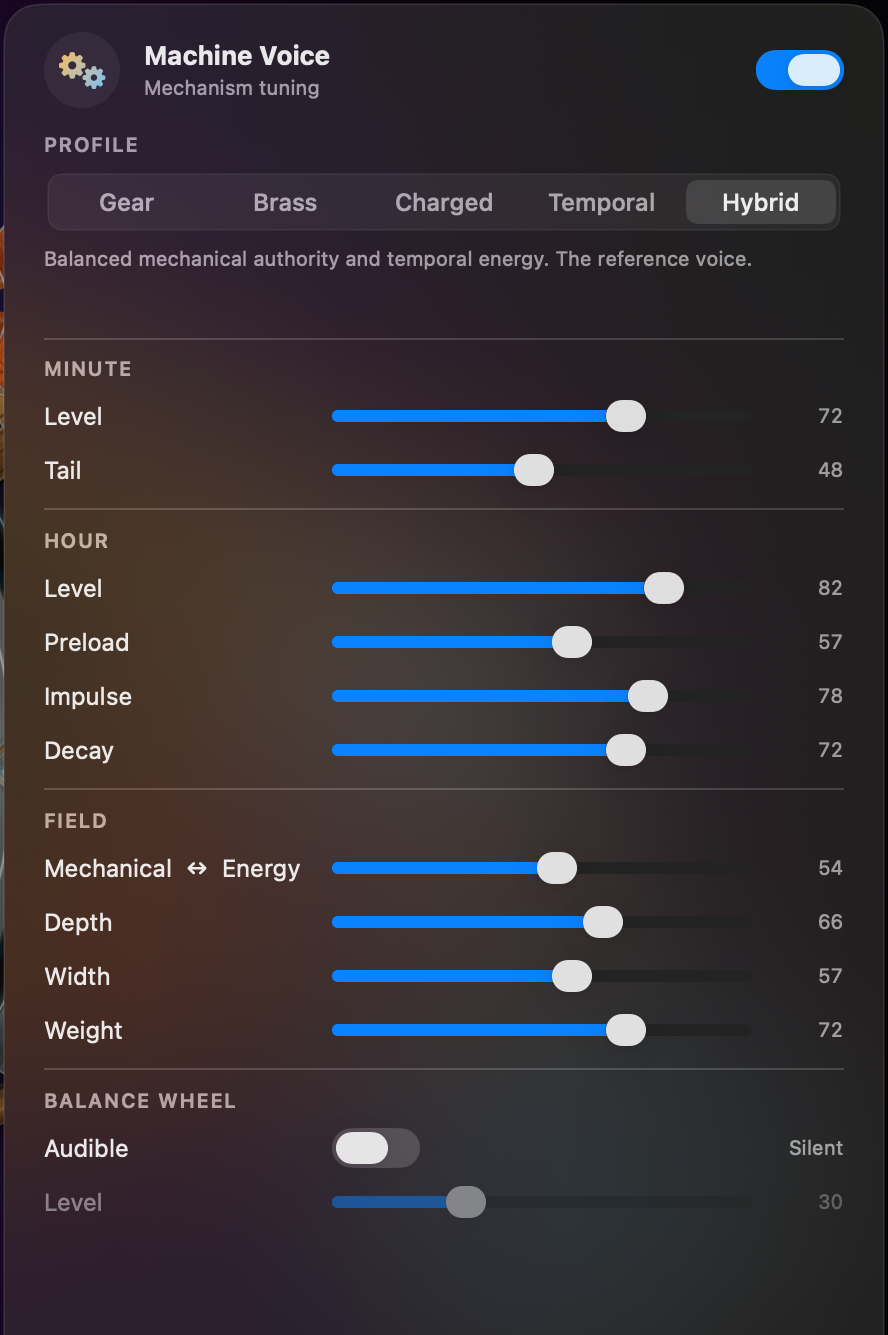
Mechanica’s sound is part of the mechanism. Minute and hour events combine physical metal, machine-body resonance and a wider acoustic field, while the balance wheel carries its own small jeweled-steel tick.
Five acoustic profiles change the character of the machine — from harder mechanical contact to brass resonance, charged energy and a deeper temporal field.
Mechanica
Designed and built by Tom Glander.